Wall Street got the rally signals from Powell it was hoping for
Get link
Facebook
X
Pinterest
Email
Other Apps
[hfe_template id='11223']
[ad_1]
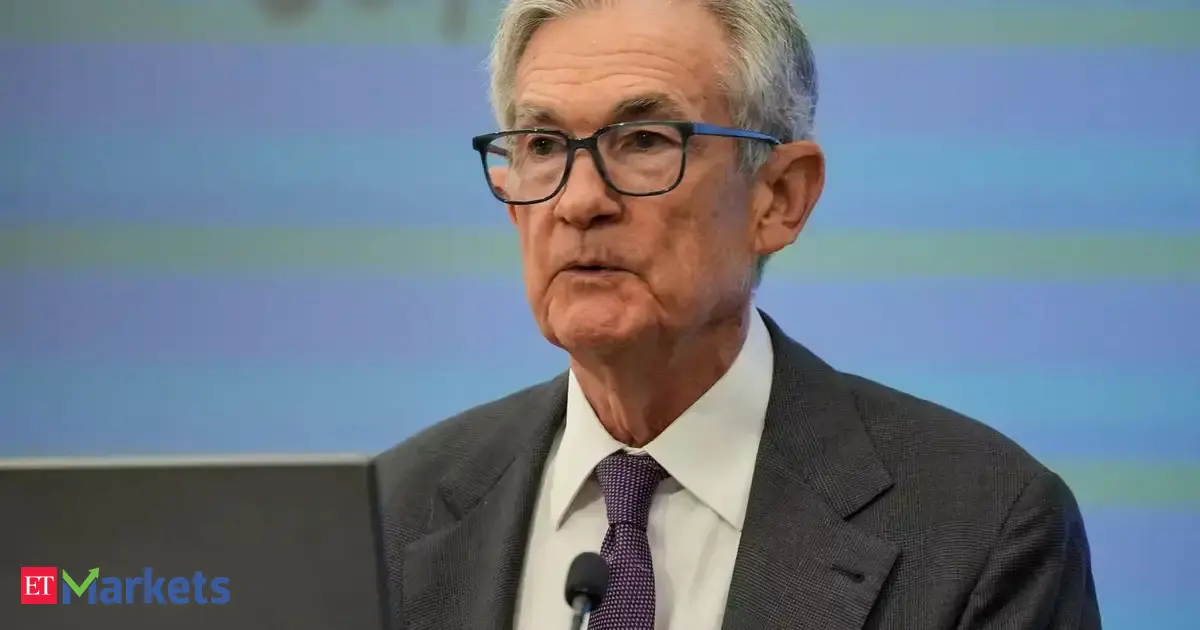
For much of this month, Wall Street traders piled into stocks and bonds, betting that the Federal Reserve was finally ready to start cutting interest rates again. All they were waiting on was the green light from Jerome Powell to keep the rally going. They got exactly what they were looking for on Friday, when the Fed chair unleashed the biggest cross-markets surge since April by striking a dovish tone during a highly anticipated speech.
Treasuries rallied, driving two-year yields down as much as 12 basis points, and futures traders made bets that a September rate cut is very likely after Powell said the “shifting balance of risks may warrant adjusting our policy stance.”
The S&P 500 Index rebounded from a five-day slide, rising 1.5% and closing just shy of a record high. Meanwhile, the Russell 2000 surged almost 4% on the back of rate- and economically-sensitive stocks. The dollar slid and risk assets like Bitcoin gained, anticipating the central bank will use policy to spur growth. Gold rose 1%.
“This is an important shift for Chairman Powell,” said Matt Maley, chief market strategist at Miller Tabak + Co LLC. “The question for the markets now is whether concerns over slower growth will cause earnings to decline, but the Fed is not going to create significant headwinds for investors.”
Bloomberg
Live Events
Powell’s speech at the annual Jackson Hole, Wyoming, symposium was eagerly awaited by financial markets, which early this month started pricing in near certainty that the Fed would cut interest rates by a quarter percentage point at next month’s meeting, the first reduction since December. With the job market losing steam, some options traders even bet on a half-point move — the sort of cut typically reserved for emergencies.
The speculation fanned risk sentiment across markets, propelling stocks to new record highs through late last week, despite concerns that President Donald Trump’s trade war is slowing the economy and worries that the Big Tech stocks driving the gains have run up too far. By April 14, the S&P 500 had rallied 30% off its early-April lows, when Trump’s tariff rollout briefly sent markets into a tailspin, largely due to the torrid advance of companies like Nvidia Corp. that are profiting from a surge of spending on artificial intelligence.
But over the last several days, doubts about the Fed’s next move started seeping in and some central bank officials warned a September cut wasn’t certain. The rally stalled after the government reported that wholesale inflation in July jumped by the most in three years, reigniting fears that stagflation could limit the central bank’s room to cut rates. That pulled the S&P 500 down for the five-straight days through Thursday and pushed up Treasury yields.
[hfe_template id='11223']
[ad_1]
Volatility in Indian equity markets has surged sharply over the past month, with the India VIX nearly doubling as geopolitical tensions and global uncertainty triggered aggressive selling in equities. India VIX, often referred to as the market’s fear gauge, has jumped close to 100% over the past month, reflecting growing nervousness among investors. The spike has coincided with a sharp correction in the broader market, with the Nifty 50 declining about 8% during the same period. The escalation of tensions involving the United States, Israel and Iran has intensified market anxiety in recent days, pushing crude oil prices sharply higher and triggering a global risk-off sentiment. However, analysts note that volatility had already been building even before the conflict escalated, reflecting broader concerns around global growth, foreign capital outflows and stretched valuations in equities. The heightened uncertainty translated into a sharp ...
[hfe_template id='11223']
[ad_1]
Benchmark indices Sensex and Nifty ended the week on a bearish note, closing over a percent lower each as a deepening selloff in IT stocks rattled investor sentiment amid mounting fears of AI-led disruption. Further, stronger-than-expected jobs data for January dampened hopes of a US Fed interest rate cut. Here are 7 factors that could decide market action in the coming week: 1.) Infosys, Wipro ADRs rebound - After a brutal two-day selloff that saw Infosys and Wipro ADRs plunge as much as 14.5%, Friday’s session brought a much-needed breather. Bargain hunting kicked in at lower levels, sparking a sharp rebound as Infosys climbed 3% while Wipro gained 4%—helping both stocks close the week on a far stronger note. International brokerage firm JP Morgan has a message for panic-stricken investors: IT services firms are the indispensable "plumbers of the tech world" and their dividend yields have now hit levels last seen only during ...
[hfe_template id='11223']
[ad_1]
Waaree Energies shares will be in focus on Wednesday after the solar panel maker reported a strong Q4 performance, with net profit rising 34.1% year-on-year (YoY) to Rs 618.9 crore for the quarter ended March 31, 2025. In the same quarter last year, the company had reported a profit of Rs 461.5 crore. Revenue from operations jumped 36.4% to Rs 4,003.9 crore, up from Rs 2,935.8 crore in the year-ago period, according to the company’s regulatory filing. EBITDA more than doubled to Rs 922.6 crore in Q4 FY25, up 120.6% from Rs 418.3 crore in the same quarter last year. The EBITDA margin improved to 23% from 14.3% a year ago. The company produced 2.06 GW of solar modules in the fourth quarter, up from 1.35 GW in the same period last year. For the full year, module production reached 7.13 GW, compared to 4.77 GW in FY24. For the full financial year FY25, revenue rose 27.62% YoY to Rs 14,846.06 crore. Profit after tax more than doubled to Rs 1,9...
 [hfe_template id='11223']
[ad_1]
[hfe_template id='11223']
[ad_1]
 Bloomberg


Comments
Post a Comment