Contrarian Thinking: Fred Kelly's approach to investment success - Contrarian thinking can help in investment success
Get link
Facebook
X
Pinterest
Email
Other Apps
[hfe_template id='11223']
[ad_1]
1/10
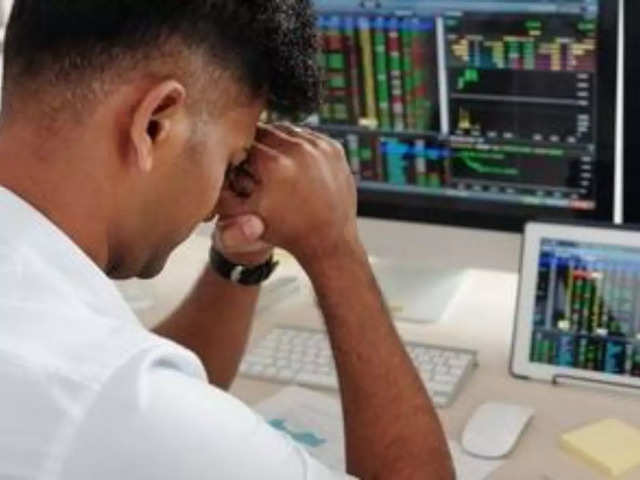
Contrarian thinking can help in investment success
Renowned writer and self-taught psychologist Fred Kelly advocated the practice of unconventional or contrarian thinking, highlighting its potential not only in profitable investments but also in various facets of life. Kelly contended that investors frequently attributed their failed investments to mere chance, yet he believed that by meticulously examining crowd behavior in response to market changes, one could steer clear of unwise investment choices.
Getty Images
2/10
Why it’s not easy to achieve success in the market
Kelly maintained the perspective that succeeding in the stock market wasn't as straightforward as merely going against the grain of popular opinion, although it may seem simple in theory. He observed that only a select few possessed the fortitude to take such contrarian actions.
Agencies
3/10
Human psychology plays a crucial role in influencing investment decisions
Kelly asserts that human psychology significantly influences investment decisions, often leading investors to sell off their valuable securities when under pressure, while retaining poor-performing ones.
Agencies
4/10
The cycle of behaviour
Kelly held the belief that average investors tend to be cautious and timid, typically entering the market at the onset of an upward trend and exhibiting similar behaviour when selling, opting for only marginal profits.
Getty Images
5/10
Vanity is the worst enemy of investor success
Kelly frequently emphasised the challenge investors face in accepting losses, often opting to hold onto investments in the hope of breaking even. Consequently, they frequently sell off profitable stocks while retaining underperforming ones. He attributed this behaviour to vanity, cautioning against placing undue faith in market rumours and tips. According to Kelly, the more investors succumb to such influences, the greater their risk of experiencing losses.
TIMESOFINDIA.COM
6/10
Greed is the worst influence on decisions
Kelly expressed the notion that only a minority of investors possessed the discipline to patiently await favourable opportunities. He identified greed as the primary adversary of patience, cautioning that the most significant losses occur when investors purchase assets at inflated prices during periods of widespread optimism. According to Kelly, investors initially acquire stocks with the intention of generating profits but ultimately sell them when prospects for further gains diminish. He highlighted how optimism, influenced by greed, could impede rational decision-making in this regard.
Agencies
7/10
Hope, the will to believe, leads to poor decisions
Kelly held the belief that investing in highly speculative, lottery-like stocks was more prone to result in losses rather than significant gains. He asserted that when the general consensus leaned towards a perception of complete safety and invulnerability in the market, it often signalled a heightened risk of panic-induced selling. This, according to Kelly, was precisely the moment when stocks tended to transition from the control of experienced investors to those less resilient.
Agencies
8/10
Being ‘logical’ is often wrong
Kelly posited that the majority of investors struggle to attain success in the realm of investment due to their inefficiency in both buying and selling. He contended that those who do achieve success often do so by contravening conventional wisdom and embracing strategies that diverge from mainstream logic.
ETMarkets.com
9/10
Why should investors follow a contrarian investing approach
Kelly maintained that to thrive in the market, investors might not always discern the actions of the highly intelligent minority. However, by observing and analysing crowd behaviour, they could glean valuable insights into what that same minority is abstaining from.
10/10
Stock market is not everyone's cup of tea
Kelly held the belief that investors who are inflexible and unwilling to adapt to market volatilities are unlikely to achieve success in the investment arena.Kelly was of the view that investors should be disinclined to look backwards otherwise they would remain perpetually unhappy.According to Kelly, another group of investors who should steer clear of the market are those who anticipate life's rewards to be easily attained and consequently, are unwilling to exert the necessary effort to identify quality stocks.(Disclaimer: This article is based on Fred Kelly's book Why You Win or Lose: The Psychology of Speculation)
[hfe_template id='11223']
[ad_1]
Volatility in Indian equity markets has surged sharply over the past month, with the India VIX nearly doubling as geopolitical tensions and global uncertainty triggered aggressive selling in equities. India VIX, often referred to as the market’s fear gauge, has jumped close to 100% over the past month, reflecting growing nervousness among investors. The spike has coincided with a sharp correction in the broader market, with the Nifty 50 declining about 8% during the same period. The escalation of tensions involving the United States, Israel and Iran has intensified market anxiety in recent days, pushing crude oil prices sharply higher and triggering a global risk-off sentiment. However, analysts note that volatility had already been building even before the conflict escalated, reflecting broader concerns around global growth, foreign capital outflows and stretched valuations in equities. The heightened uncertainty translated into a sharp ...
[hfe_template id='11223']
[ad_1]
Benchmark indices Sensex and Nifty ended the week on a bearish note, closing over a percent lower each as a deepening selloff in IT stocks rattled investor sentiment amid mounting fears of AI-led disruption. Further, stronger-than-expected jobs data for January dampened hopes of a US Fed interest rate cut. Here are 7 factors that could decide market action in the coming week: 1.) Infosys, Wipro ADRs rebound - After a brutal two-day selloff that saw Infosys and Wipro ADRs plunge as much as 14.5%, Friday’s session brought a much-needed breather. Bargain hunting kicked in at lower levels, sparking a sharp rebound as Infosys climbed 3% while Wipro gained 4%—helping both stocks close the week on a far stronger note. International brokerage firm JP Morgan has a message for panic-stricken investors: IT services firms are the indispensable "plumbers of the tech world" and their dividend yields have now hit levels last seen only during ...
[hfe_template id='11223']
[ad_1]
Waaree Energies shares will be in focus on Wednesday after the solar panel maker reported a strong Q4 performance, with net profit rising 34.1% year-on-year (YoY) to Rs 618.9 crore for the quarter ended March 31, 2025. In the same quarter last year, the company had reported a profit of Rs 461.5 crore. Revenue from operations jumped 36.4% to Rs 4,003.9 crore, up from Rs 2,935.8 crore in the year-ago period, according to the company’s regulatory filing. EBITDA more than doubled to Rs 922.6 crore in Q4 FY25, up 120.6% from Rs 418.3 crore in the same quarter last year. The EBITDA margin improved to 23% from 14.3% a year ago. The company produced 2.06 GW of solar modules in the fourth quarter, up from 1.35 GW in the same period last year. For the full year, module production reached 7.13 GW, compared to 4.77 GW in FY24. For the full financial year FY25, revenue rose 27.62% YoY to Rs 14,846.06 crore. Profit after tax more than doubled to Rs 1,9...
 [hfe_template id='11223']
[ad_1]
[hfe_template id='11223']
[ad_1]











Comments
Post a Comment